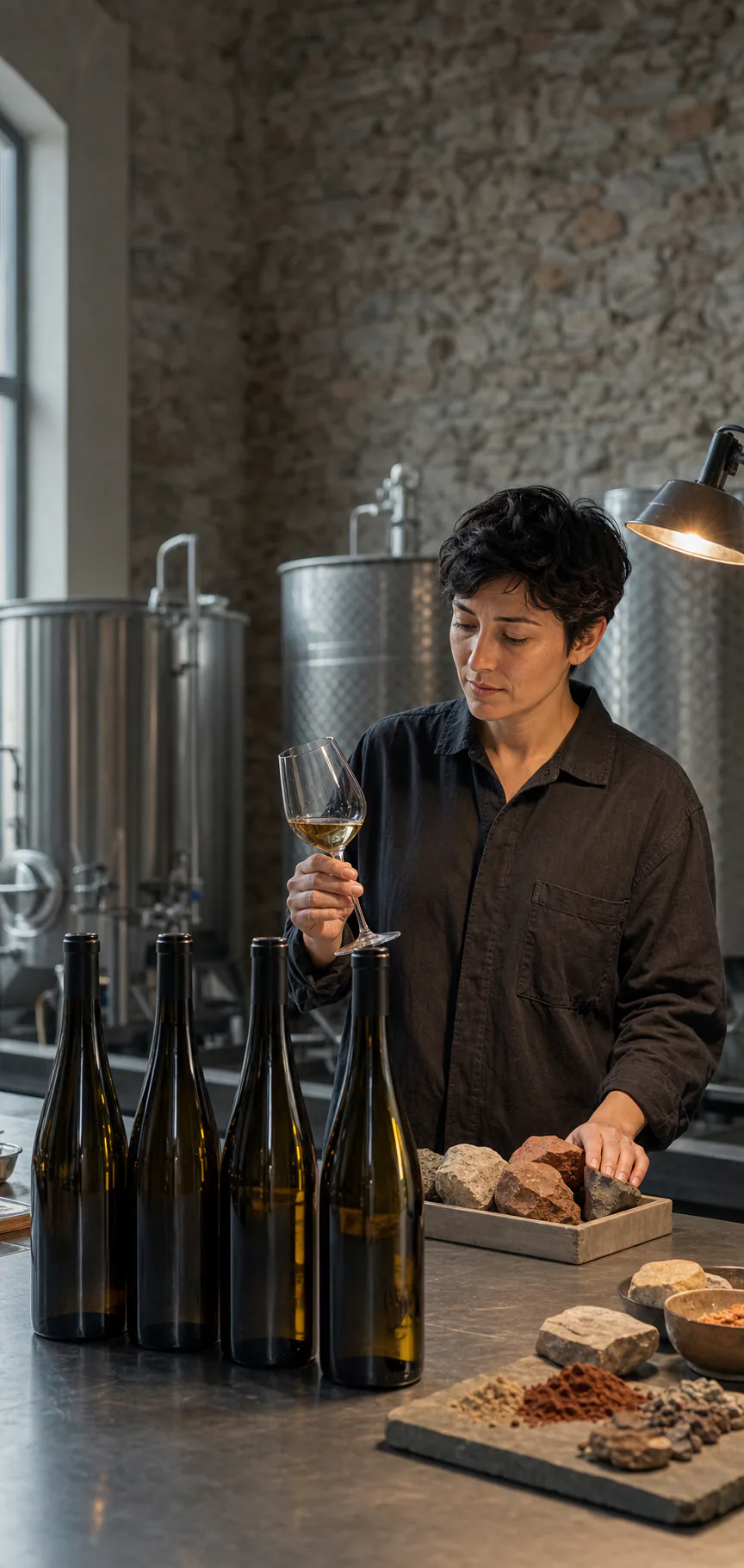
Flint & Fable occupies a roofless cutting shed once used to grade pale local stone. The first wines were poured from a folding table.
The edge of the glass
Before aroma, a wine offers light. A watery rim can suggest one kind of structure; a saturated core suggests another. Neither is a verdict. Color is the first question, not the answer.
Temperature changes the signal
The same glass looks different at ten degrees and at eighteen. Condensation softens the view, movement changes opacity, and a colder pour can make a vivid wine appear tighter than it feels.
Then we taste
Only after the visual study do we reach for fruit, herb, mineral, or spice. Starting with color slows the rush to name things. It leaves a little more room for what the wine is actually doing.
“Texture is information. We leave enough of it in the wine for you to find your own way through.”Back to all notes